

How the SDG Innovation Accelerator Supports Sustainable Leadership
Sustainability is no longer a topic reserved solely for ESG departments or strategic documents. Increasingly, it is becoming a matter of mindset, decision-making, and an organization’s ability to respond to complex market, societal, and technological changes over the long term.
This is precisely the foundation of the SDG Innovation Accelerator, a United Nations Global Compact programme through which companies strengthen their internal capabilities for more sustainable business practices, while participants develop new approaches to innovation, collaboration, and leadership within their organizations.
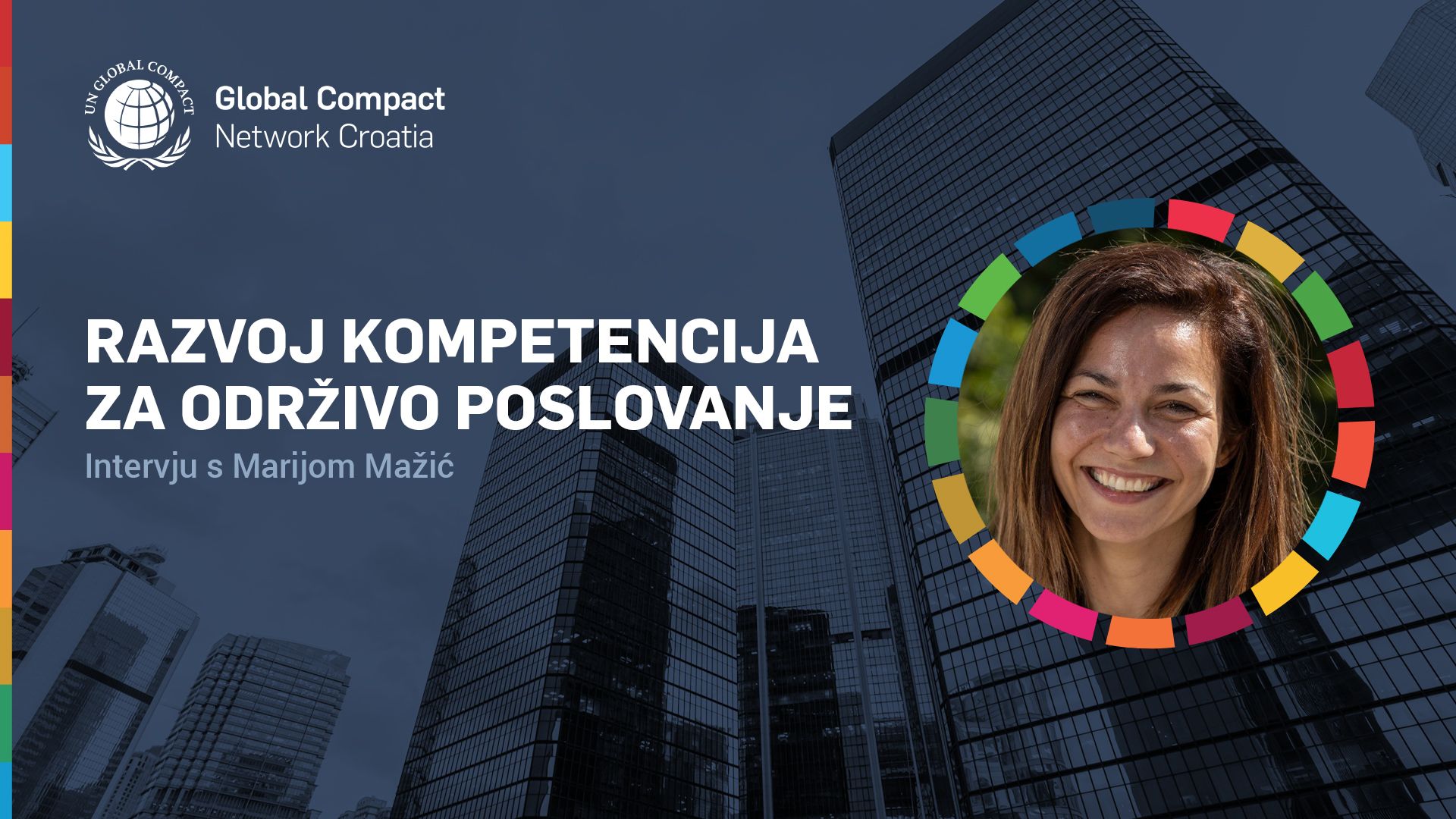
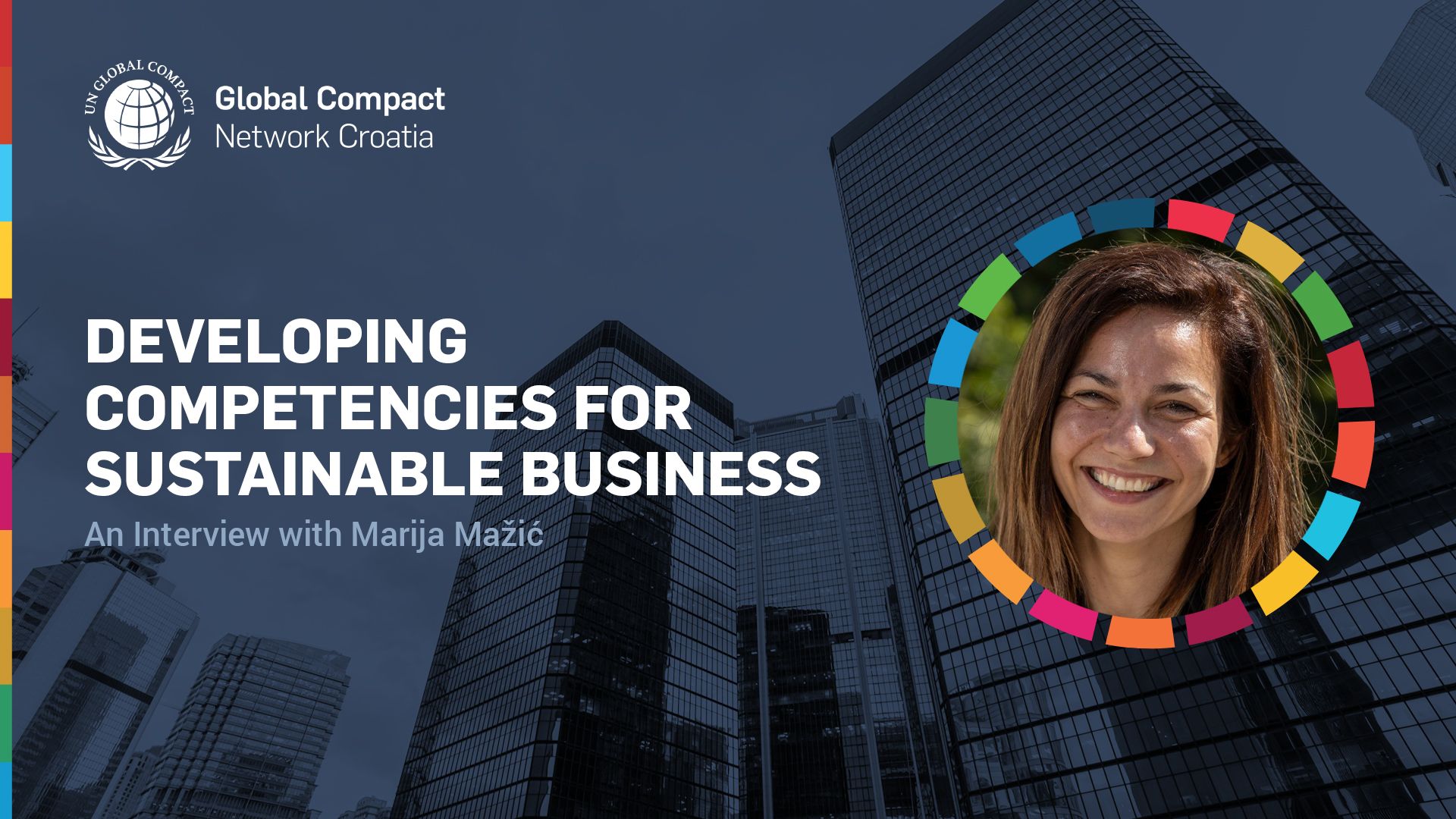
A key role in supporting participants throughout the programme is played by Marija Mažić, facilitator of the SDG Innovation Accelerator implemented in Croatia by Global Compact Network Croatia and an expert in resilience. Her role is to guide the process, encourage the exchange of ideas, and create an environment in which participants can develop sustainable business solutions while also cultivating new approaches to leadership, collaboration, and innovation.
According to Mažić, one of the programme’s greatest strengths lies in the way it is designed.
“The entire process is highly interactive and, from the very beginning, requires participants to actively engage through dialogue, questioning, testing ideas, and working on real-world challenges.”
She adds that the Accelerator succeeds in maintaining two important elements at the same time: an honest recognition of the challenges organizations face today and a belief that meaningful change within the business sector is possible. In this context, the UN Global Compact provides organizations with a structure, a community, and a practical framework through which sustainability can be translated into real business decisions and tangible change.
Sustainability as Part of Business Decision-Making
In a world saturated with information, trends, and differing interpretations of sustainability, young professionals often need practical frameworks that help translate sustainability ambitions into business action.
“The SDG framework and UN Global Compact methodology help young professionals view sustainability not simply as an abstract value or a communication topic, but as a very practical tool for making better business decisions.”
Mažić emphasizes that programme participants are not “future leaders” in some distant or abstract sense. They are individuals who are already involved in decision-making processes and influencing change within their organizations.
For that reason, the value of the programme extends far beyond education. It provides participants with a structured approach, connects them to an international context, and demonstrates that the changes they are developing are not isolated efforts, but part of a broader global movement towards more sustainable and responsible business models.
Why Complex Challenges Have Become Businesses’ Greatest Test
One of the key approaches used throughout the programme is design thinking, a methodology that helps participants develop solutions to complex sustainability challenges.
As Mažić explains, today’s business challenges rarely have simple causes or a single “right” solution. Instead, they involve multiple stakeholders, competing interests, interconnected systems, and constantly evolving circumstances.
For this reason, design thinking does not begin with the goal of finding answers as quickly as possible. Rather, it starts with a deep understanding of the problem itself. Through this process, participants learn to incorporate diverse perspectives, test ideas, and develop solutions that respond to real needs within their organizations and wider stakeholder communities.
“Rather than searching for quick fixes, participants develop the ability to ask better questions, incorporate different perspectives, and create models that can generate meaningful long-term impact.”
The broader value of the Accelerator lies not only in the project solutions participants develop, but also in the capabilities and mindset they develop to lead organizational transformation.
Building Resilience for Long-Term Change
An important part of the Accelerator focuses on building resilience and understanding how sustainable organizational change develops over time.
According to Mažić, sustainability and resilience are naturally interconnected concepts because both require a long-term perspective and an organization’s ability to create value without exhausting people or resources.
Meaningful change within companies rarely happens quickly or easily. That is why she does not view resilience as the ability to simply “endure more,” but rather as the ability to remain connected to the purpose behind one’s work, even when progress becomes more complex or slower than expected.
She also places significant emphasis on psychological safety within teams.
“I do not see psychological safety as a ‘soft’ topic, but as one of the fundamental prerequisites for effective collaboration, innovation, and sustainable long-term results.”
When people feel able to ask questions, express disagreement, and propose new ideas without fear of judgment, teams collaborate more effectively, learn more quickly, and develop solutions that are more likely to succeed in practice.
In this way, the Accelerator supports not only the development of ideas but also strengthens participants’ capacity to lead change in a thoughtful, inclusive, and sustainable way.
Croatian Teams Keeping Pace with International Standards
Speaking about programme participants in Croatia, Mažić highlights that the quality of the ideas being developed is fully comparable to international standards.
She notes this from her experience working in international programmes, including environments where participants often benefit from stronger support systems, greater institutional backing, and more opportunities to develop innovations in agile settings.
Within the Croatian programme, much of the value stems from participants developing their ideas within existing organizations, processes, and operational constraints.
“Here, we work with intrapreneurs – people who apply an entrepreneurial mindset to drive innovation within existing companies, processes, and limitations. That can often be far more demanding.”
For this reason, the quality of the ideas and the depth of thinking demonstrated by participants provide further evidence of the strong potential of Croatian teams in a broader international context.
A New Generation of Leaders Who Ask Better Questions
For Mažić, the clearest sign that the programme is cultivating a new generation of sustainable business leaders lies in the shift in participants’ way of thinking.
Rather than focusing solely on building a project, they begin approaching challenges within their organizations differently. They become less concerned with finding the fastest answer and more focused on asking better questions, understanding the broader context, incorporating diverse perspectives, and considering the long-term consequences of business decisions.
“The leaders of the future will not be those who always have the quickest answer, but those who know how to create the conditions for people to arrive at better answers together.”
That is why the value of the Accelerator extends far beyond the projects developed during the programme. It is equally reflected in the people who leave the programme with greater confidence, broader perspectives and stronger capabilities to drive sustainable change within their organizations and beyond.
Blog EN