

Clobal Compact network Croatia – Facts & Figures 2024*
This analysis draws on questionnaire responses from UN Global Compact member companies that submitted the 2024 Digital Communication on Progress (COP).
The findings show that sustainability is increasingly embedded in how companies plan, manage, and develop their business activities. The data offer insight into current practices among Network members as well as the broader direction in which the Croatian business sector is evolving.
Anti-Corruption
Robust anti-corruption systems are essential for safeguarding business integrity, managing risks, and building stakeholder trust. The analysis examines the extent to which member companies have established formal policies, mechanisms, and practices to prevent corruption.
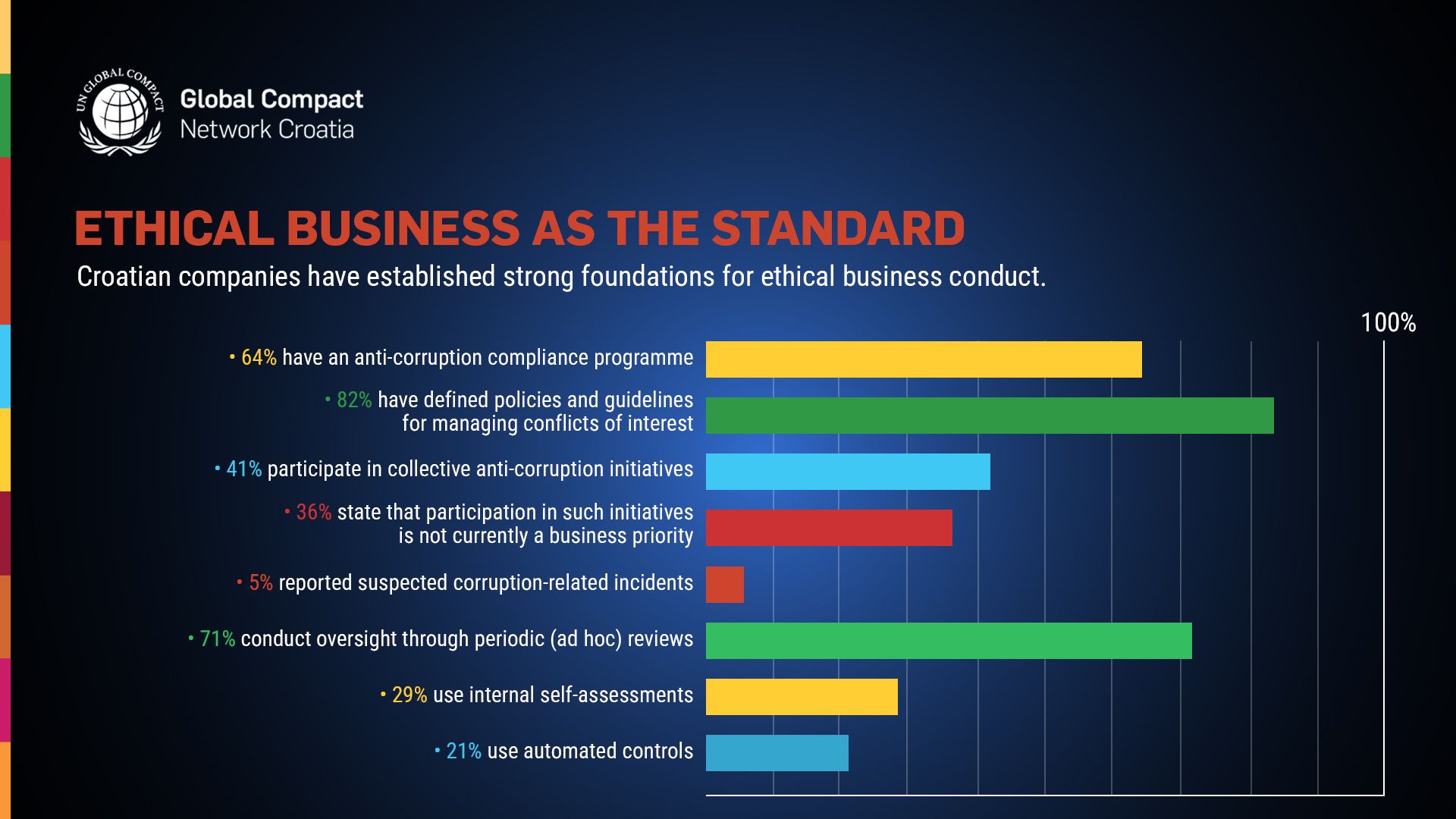
The results indicate a relatively high level of formalization of preventive measures within companies, including compliance programmes and policies addressing conflicts of interest. At the same time, limited participation in collective anti-corruption initiatives and a reliance on internal oversight mechanisms suggest opportunities to strengthen collaboration and independent monitoring.
Human Rights and Labour Relations
Safe, fair, and supportive working conditions are a core component of sustainable business. The analysis highlights the issues companies most frequently identify as material to their operations and value chains.
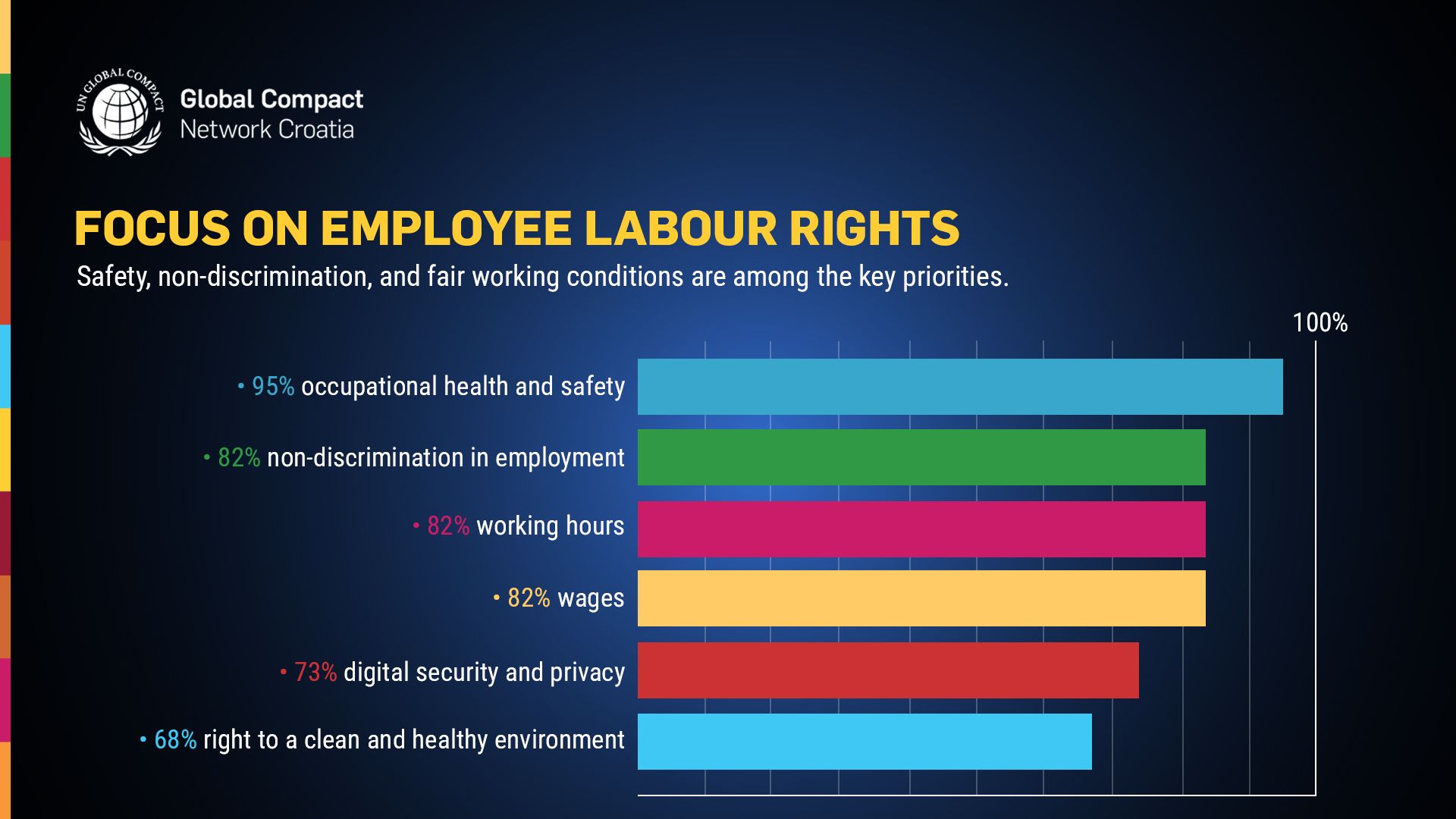
The results reveal a strong focus on internal employment practices, particularly occupational health and safety, non-discrimination, and fair working conditions. Issues related to supply chains and broader societal impacts appear less prominent, indicating scope for expanding due diligence across the value chain.
Policy Commitment
Formal policies provide the foundation for the systematic management of human and labour rights risks.
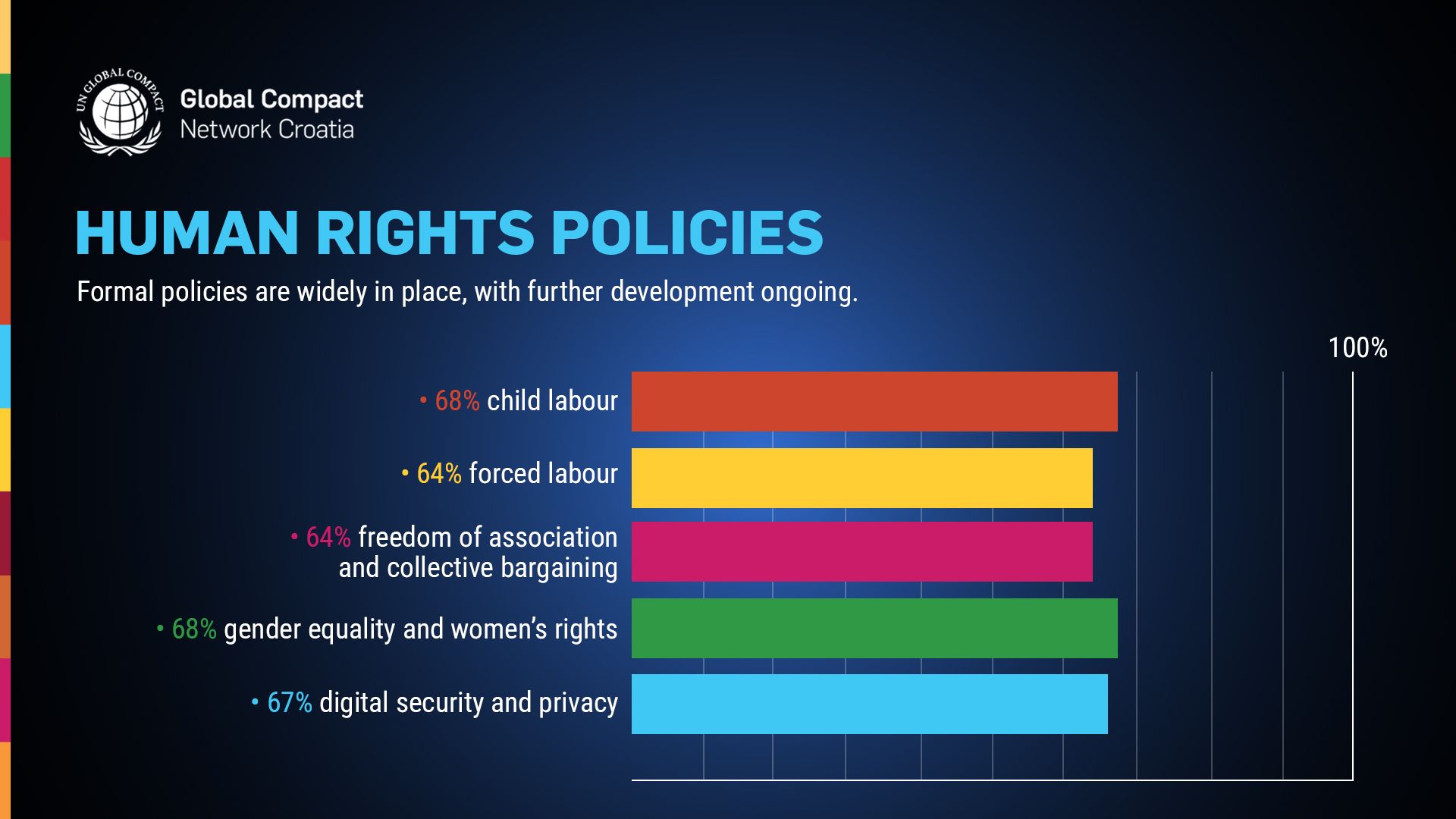
Most companies report that key human rights topics are already covered by existing policies or formal frameworks. However, the fact that some organizations plan to introduce such policies in the coming years points to the need for further formalization of commitments, especially in light of evolving European regulatory requirements and stakeholder expectations.
Environment and Climate Change
Environmental and climate challenges are increasingly shaping the business landscape and require systematic monitoring and management of impacts.
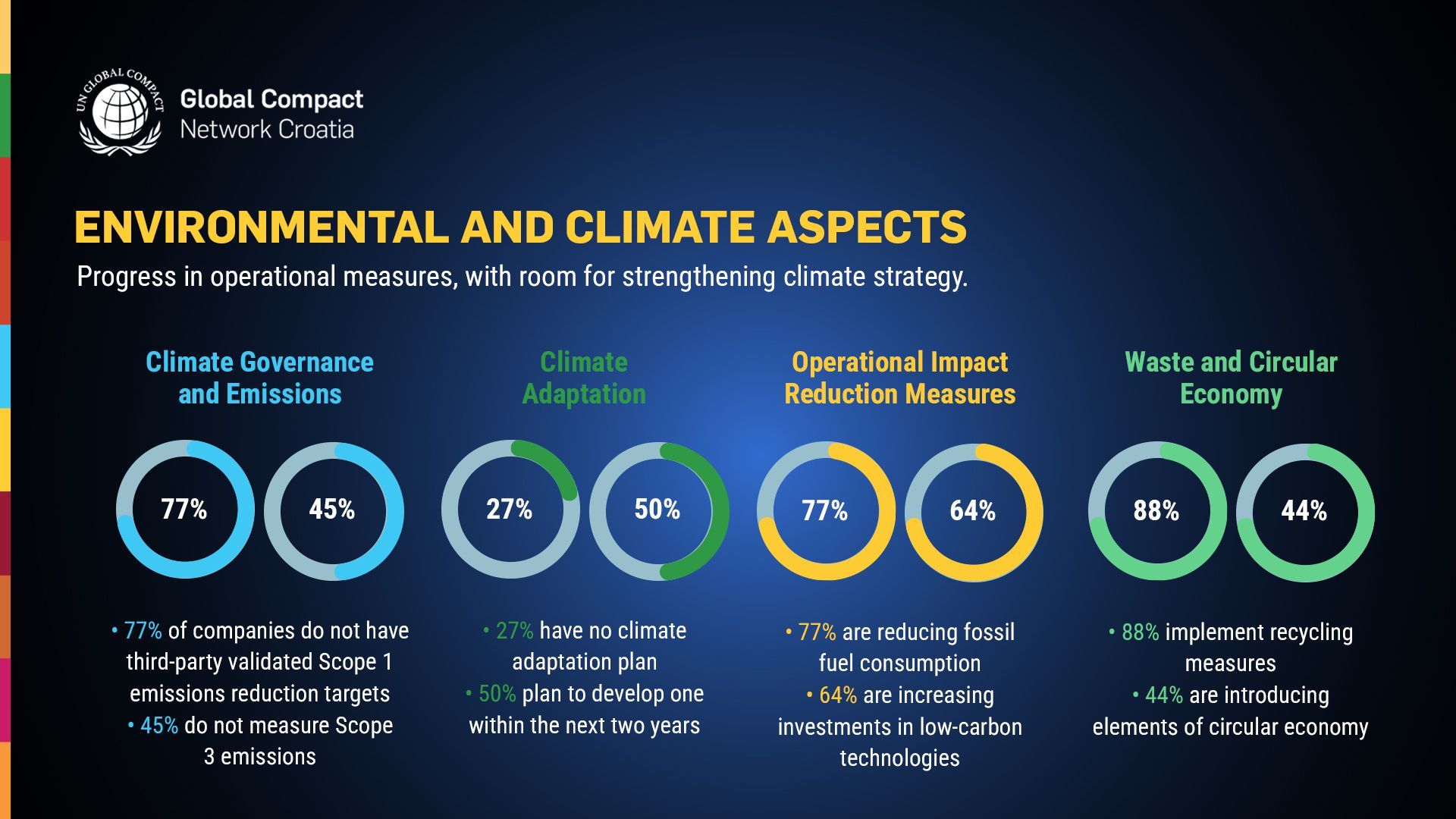
Companies report progress in operational measures to reduce their environmental footprint, including energy efficiency improvements, investments in low-carbon technologies, and waste management initiatives. However, key elements of strategic climate governance – such as validated emissions-reduction targets and measurement of value-chain emissions – remain under development, highlighting the need for stronger long-term approaches to climate transition.
Sustainable Development Goals (SDGs)
The SDGs are increasingly used as a framework for understanding the broader impacts of business activities and aligning them with long-term development priorities.
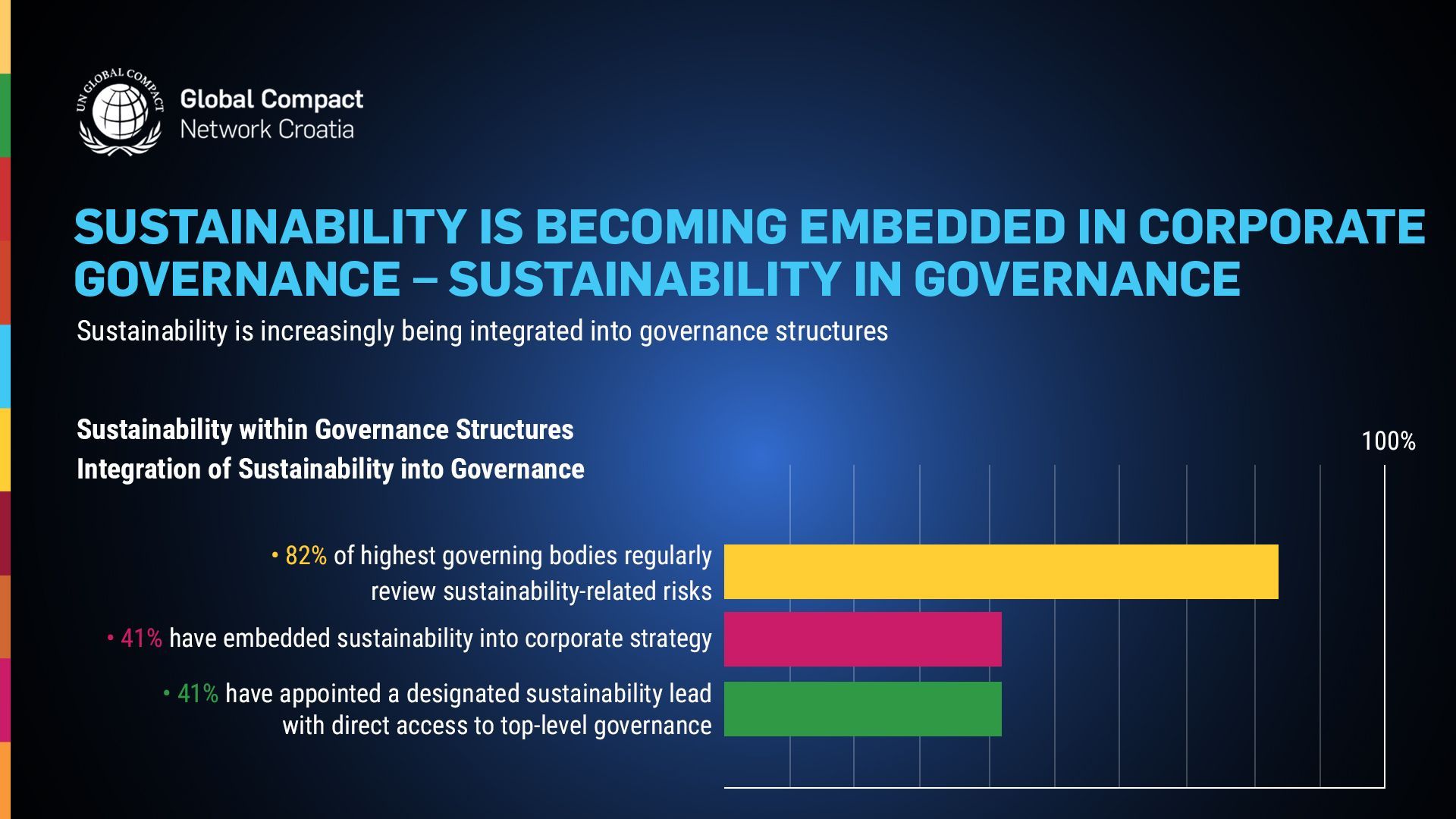
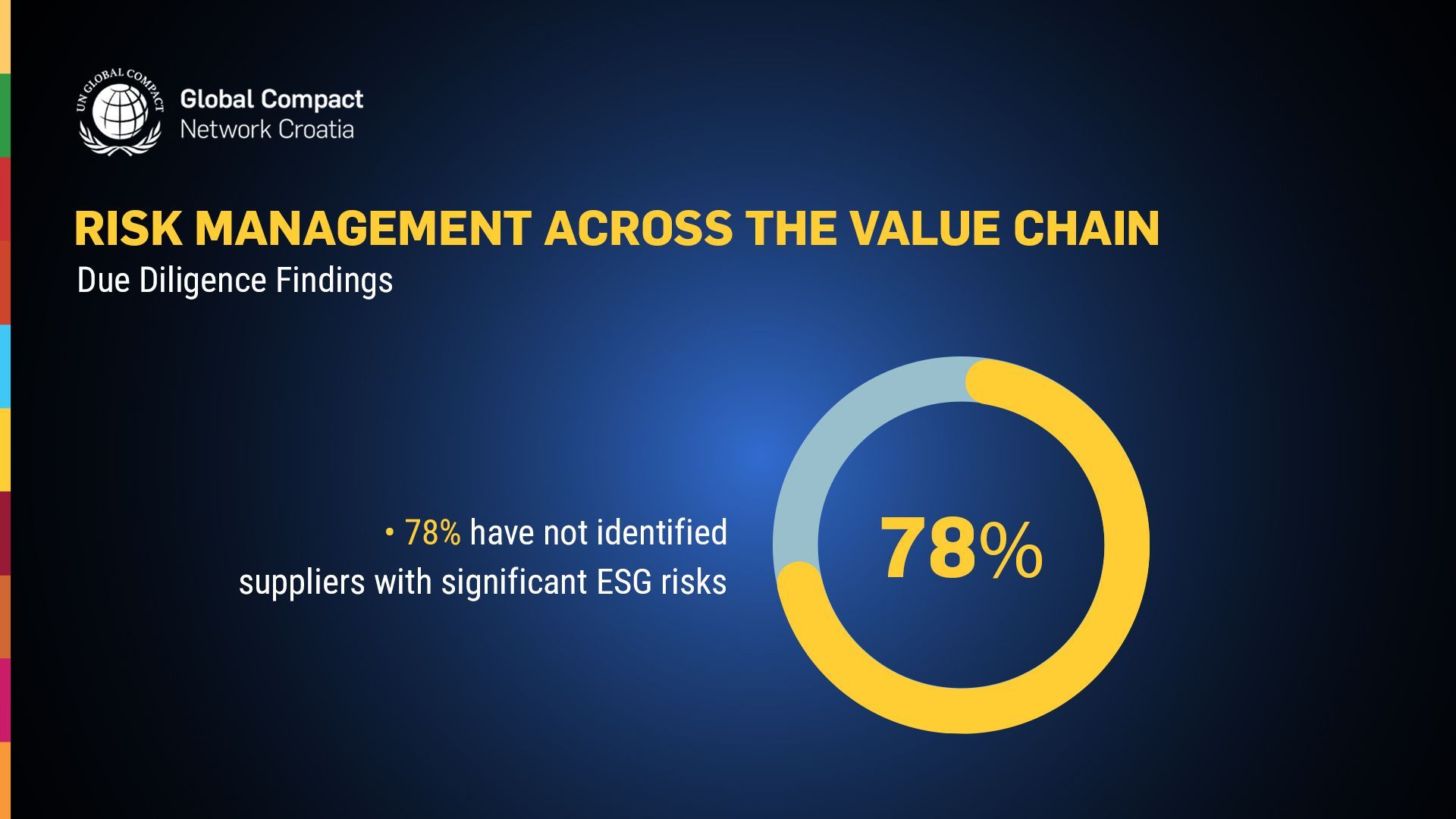
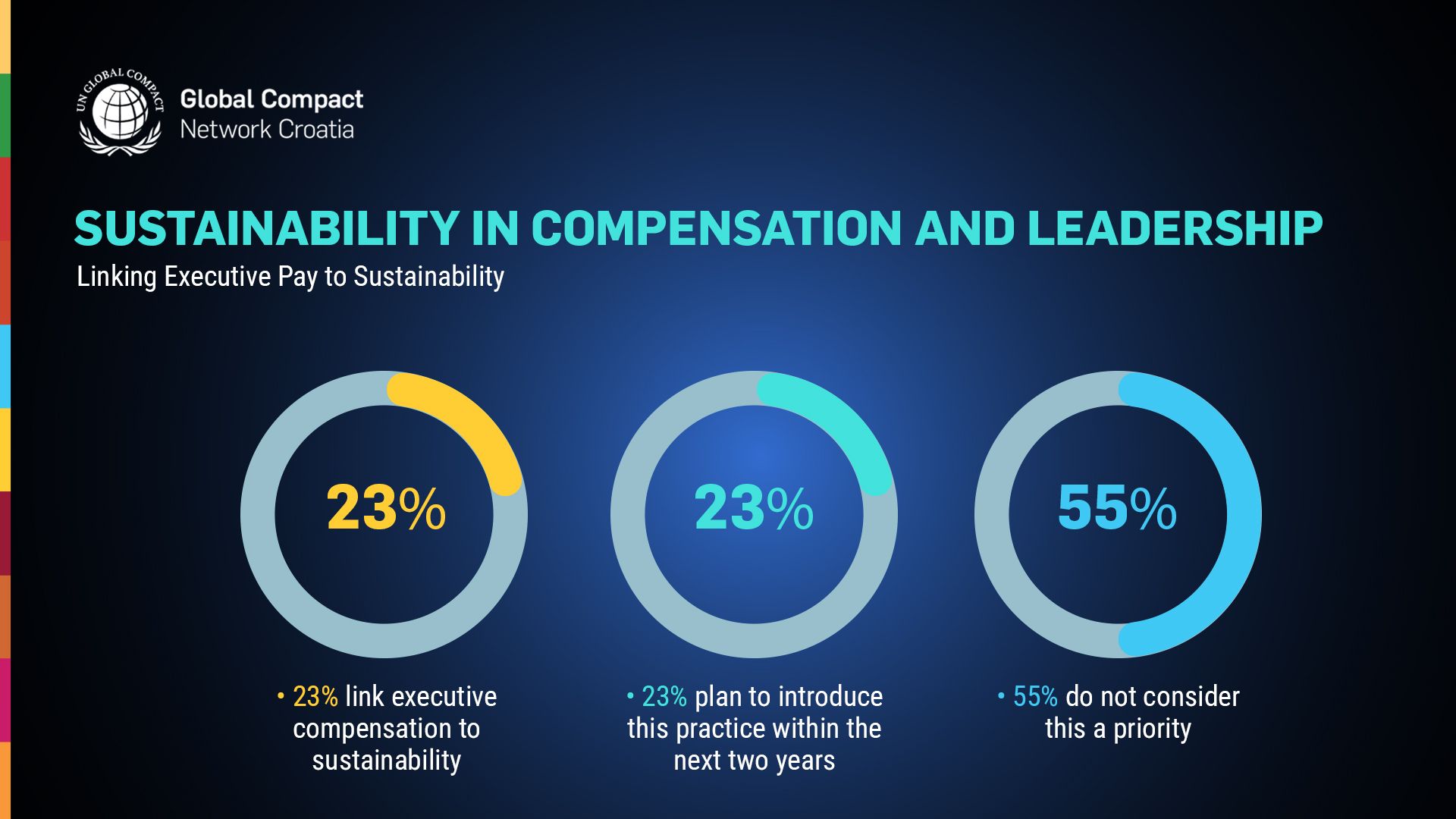
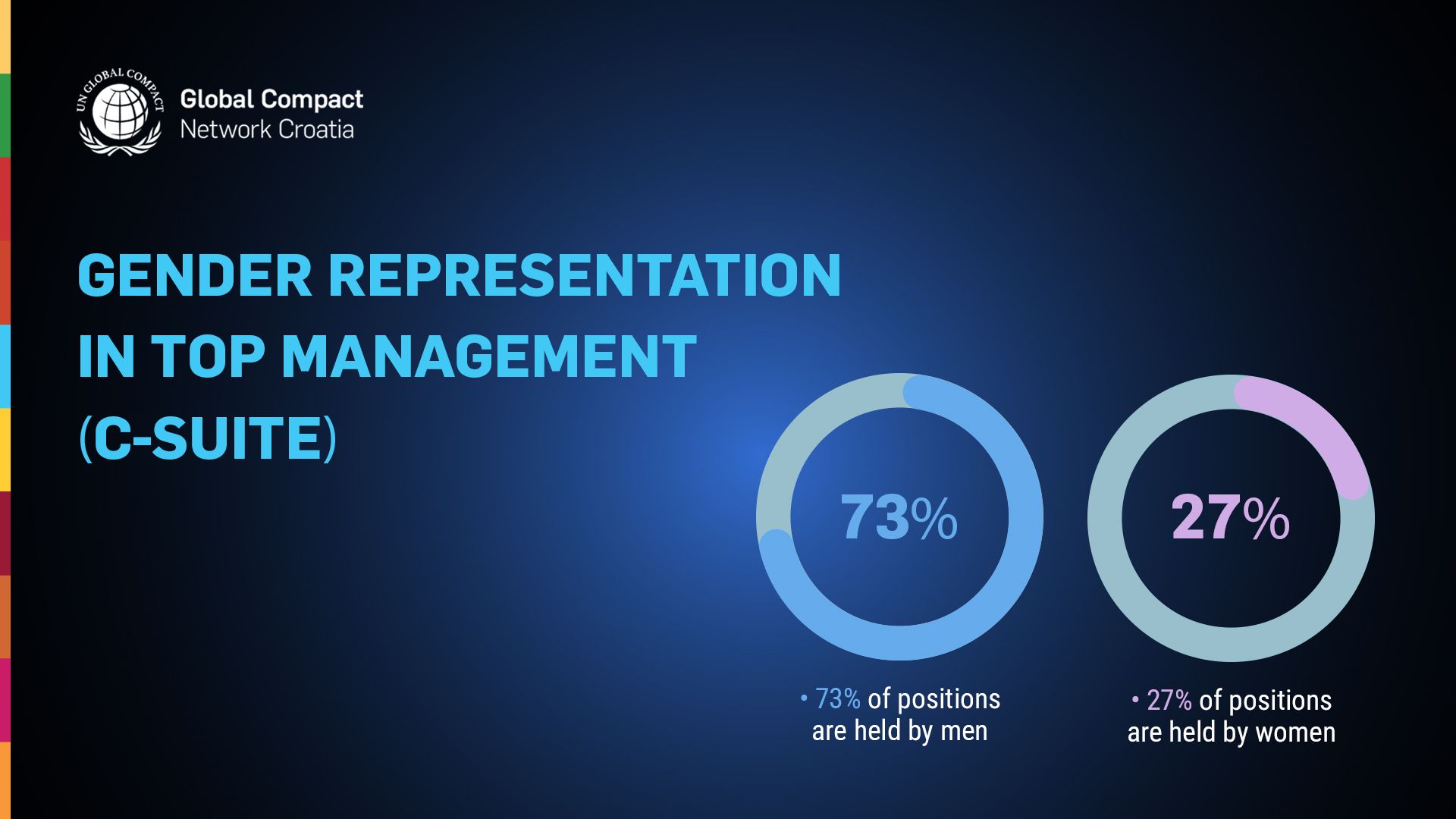
The findings indicate that sustainability is gradually moving from an operational concern to a strategic management priority, with senior leadership increasingly engaged in risk assessment and decision-making. At the same time, limited links between sustainability performance and executive remuneration, as well as persistent gender imbalance in top management, point to areas for further development.
CONCLUSION
Member companies of the UN Global Compact Network Croatia have established strong foundations for sustainable business practices and are increasingly integrating sustainability into strategic decision-making, investment planning, and risk management.
The UN Global Compact Network Croatia plays a key role in this transition by connecting international standards, knowledge, and tools with the specific needs of the Croatian business community, enabling companies to advance more effectively and with greater confidence.
Blog EN